


Dear Subscribers,
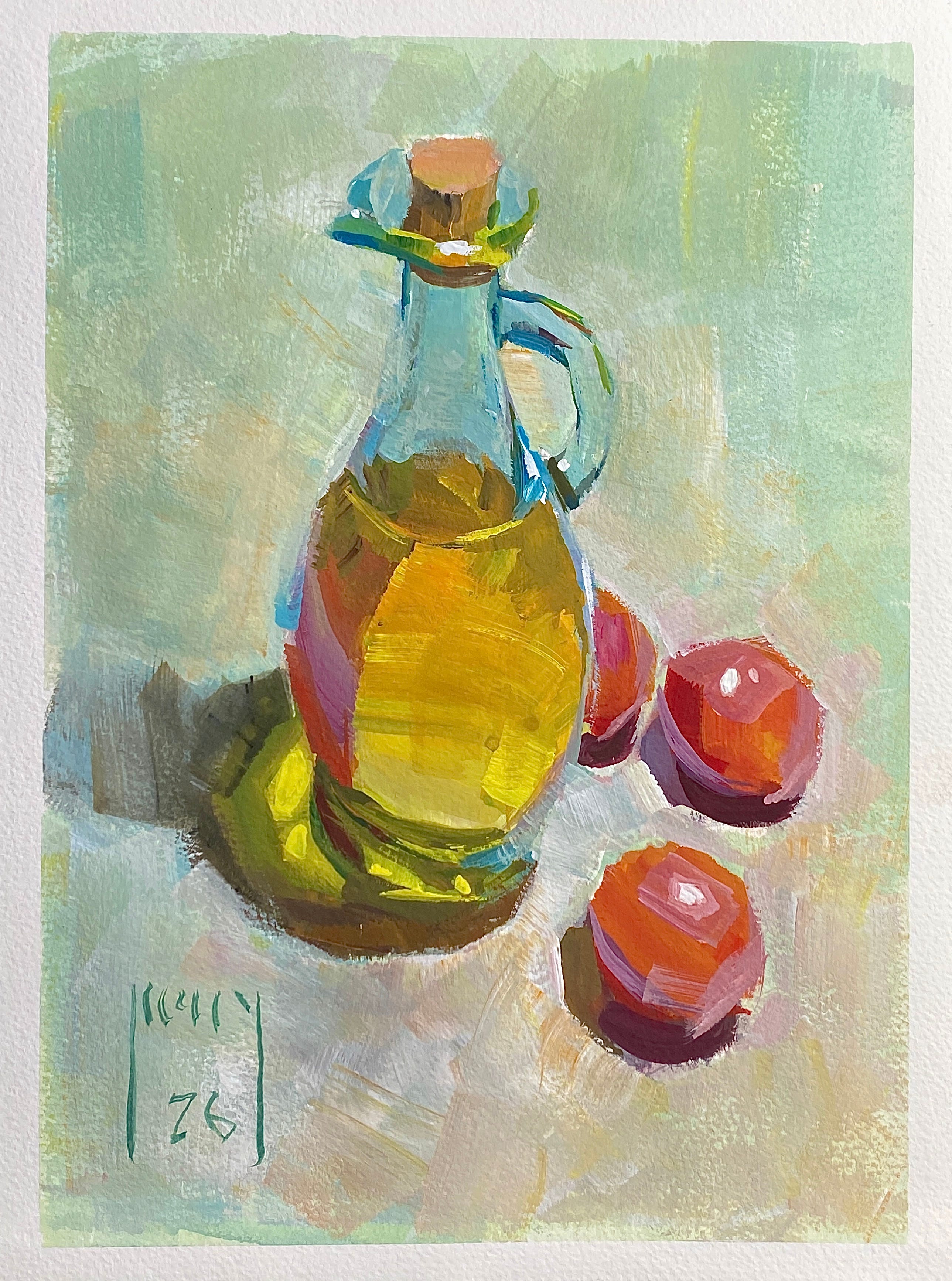
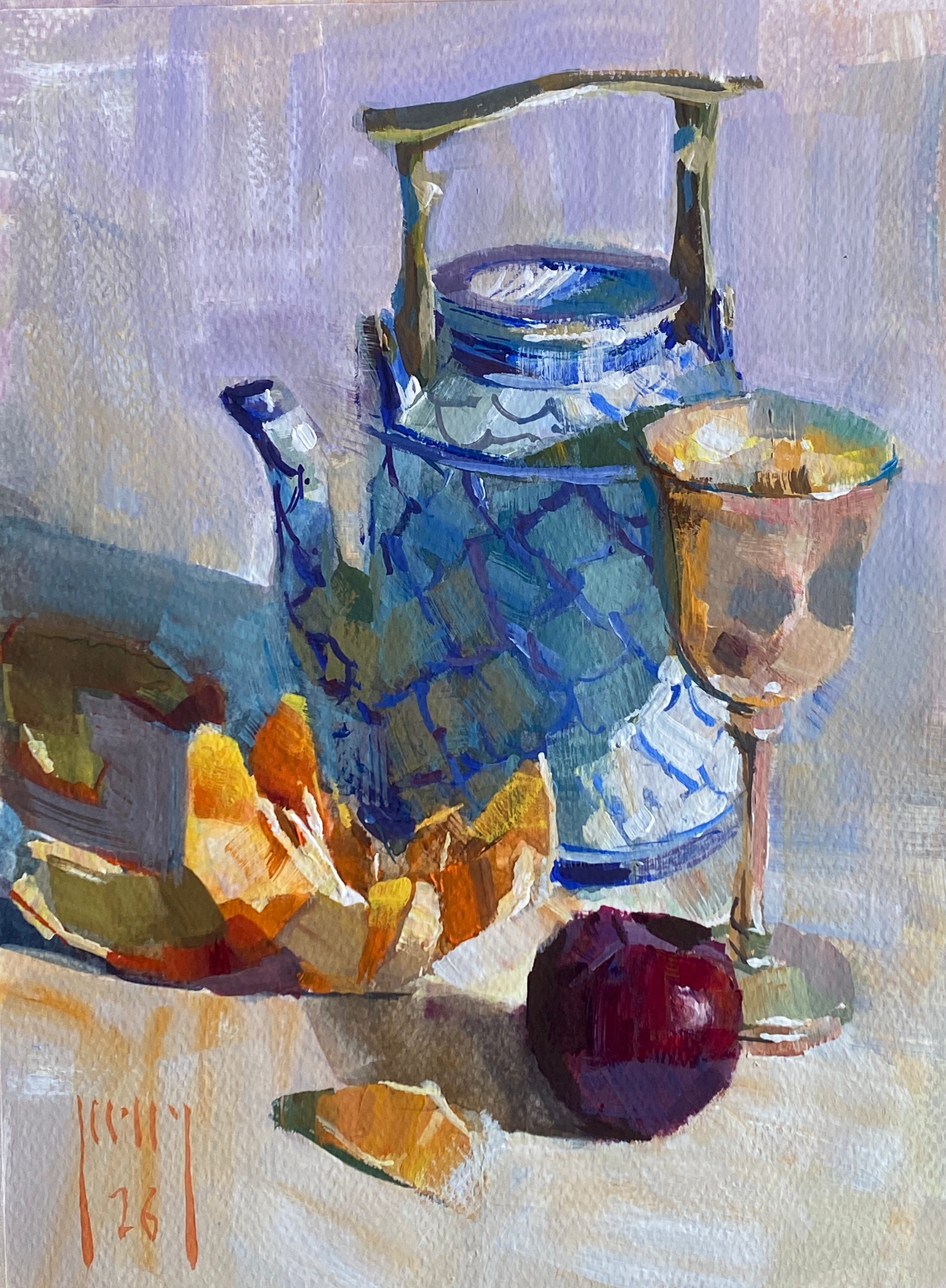
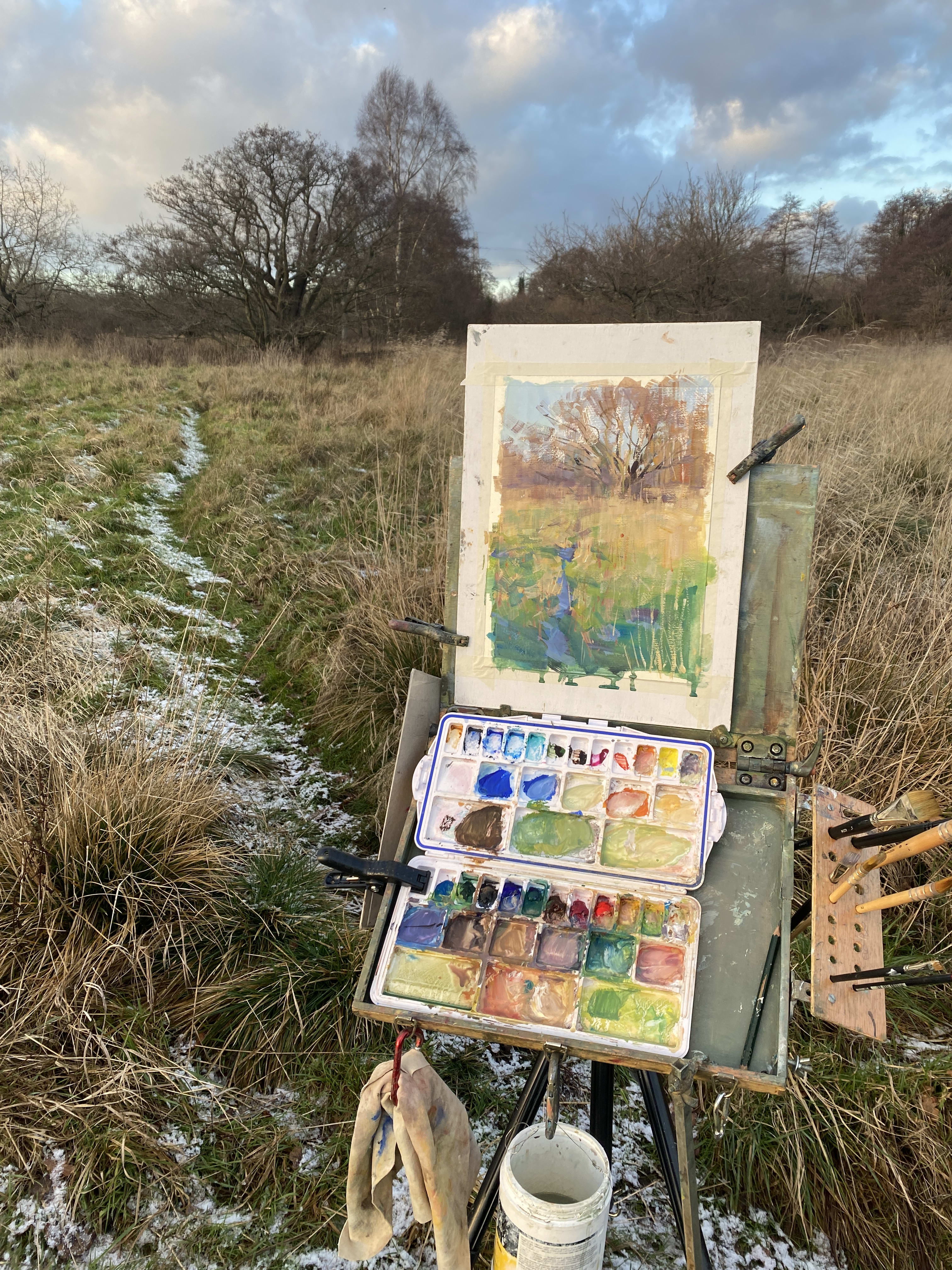
Here is the recording of the live painting class held on 3 January 2026. For this session I worked in gouache, a medium I’ve been meaning to explore more seriously.
Compared to oil, gouache has a noticeably compressed value range. This alone makes it a tricky beast, but matters are further complicated by the way values shift as the paint dries—something that takes a while to calibrate the eye to. Chroma, too, is generally lower than oil. On the plus side, it dries quickly, which makes layering almost effortless, and allows textural and broken-colour effects to be established with remarkable speed.
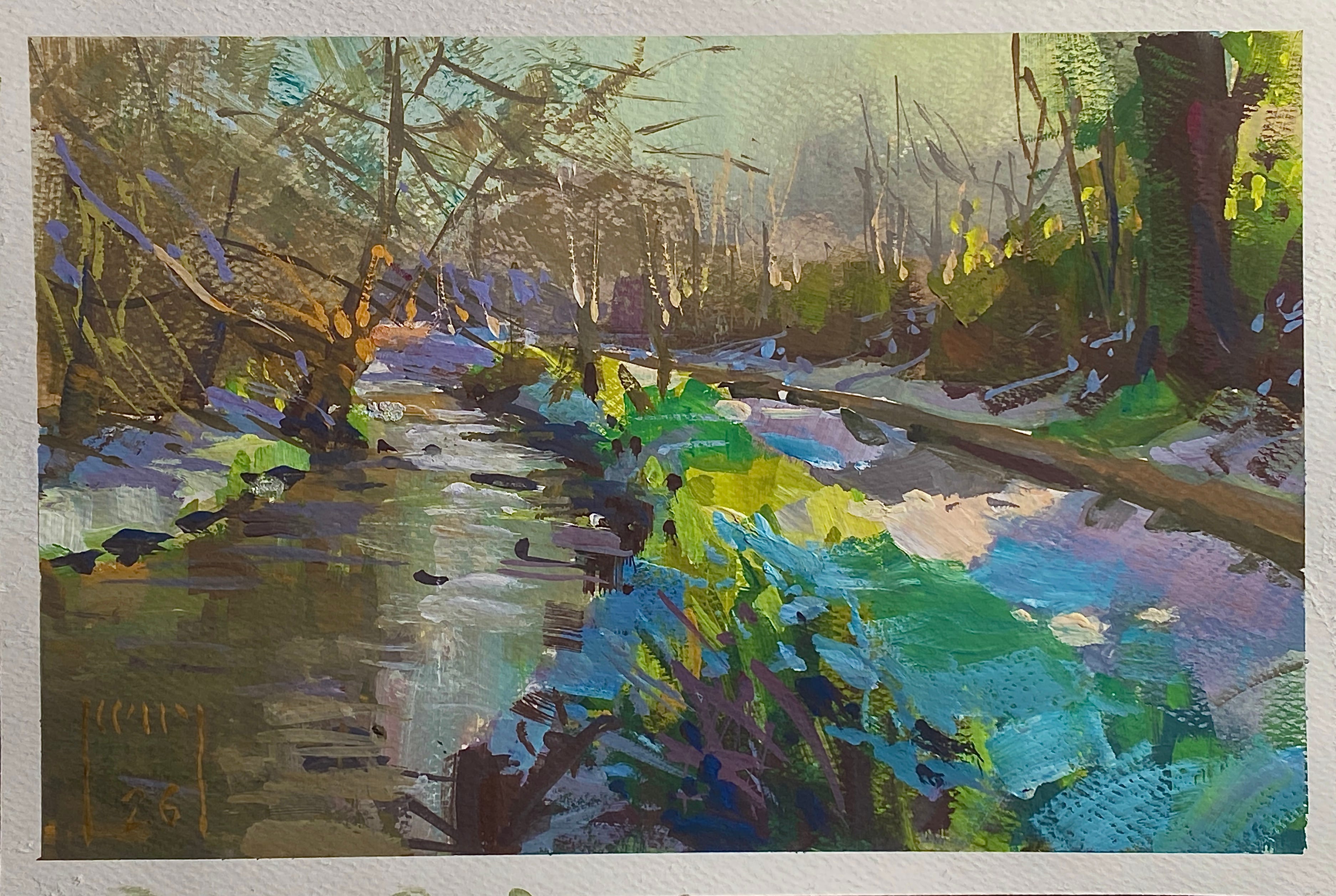
Taken together, these limitations would be reason enough for a battle-hardened oil painter to steer well clear. But I’ve been reflecting on the way limitations can function as a blessing in disguise: they force invention, and they compel us to find alternative routes to expression. One thing I’ve already noticed is that I’m thinking far more carefully about design—about shape variety and harmony—to compensate for the reduced value range. The desire to make interesting pictures remains, regardless of the medium. Oil has its own constraints too. So I’m treating this as an opportunity to sharpen my aesthetic sensibilities on the grinding stone of limitation.
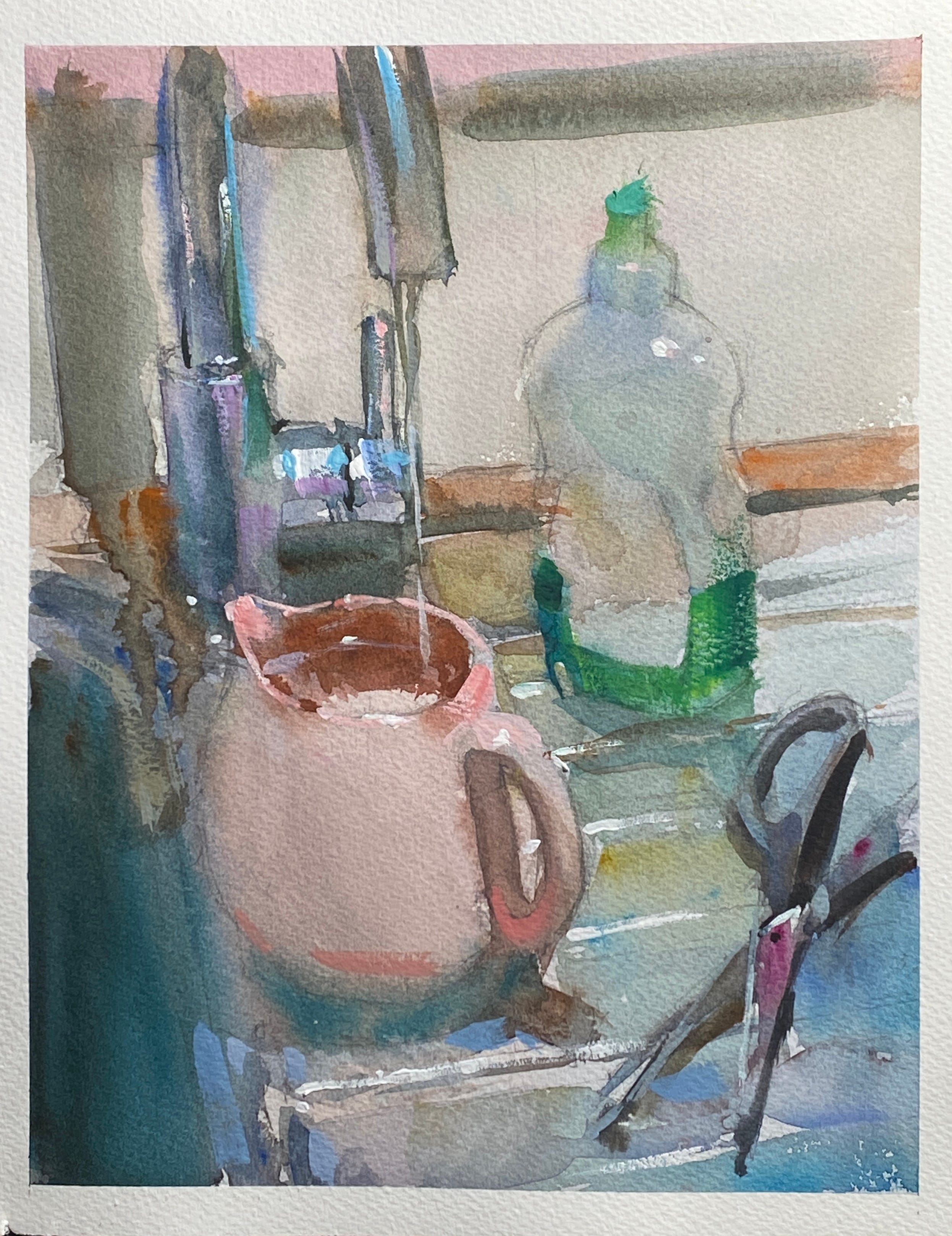
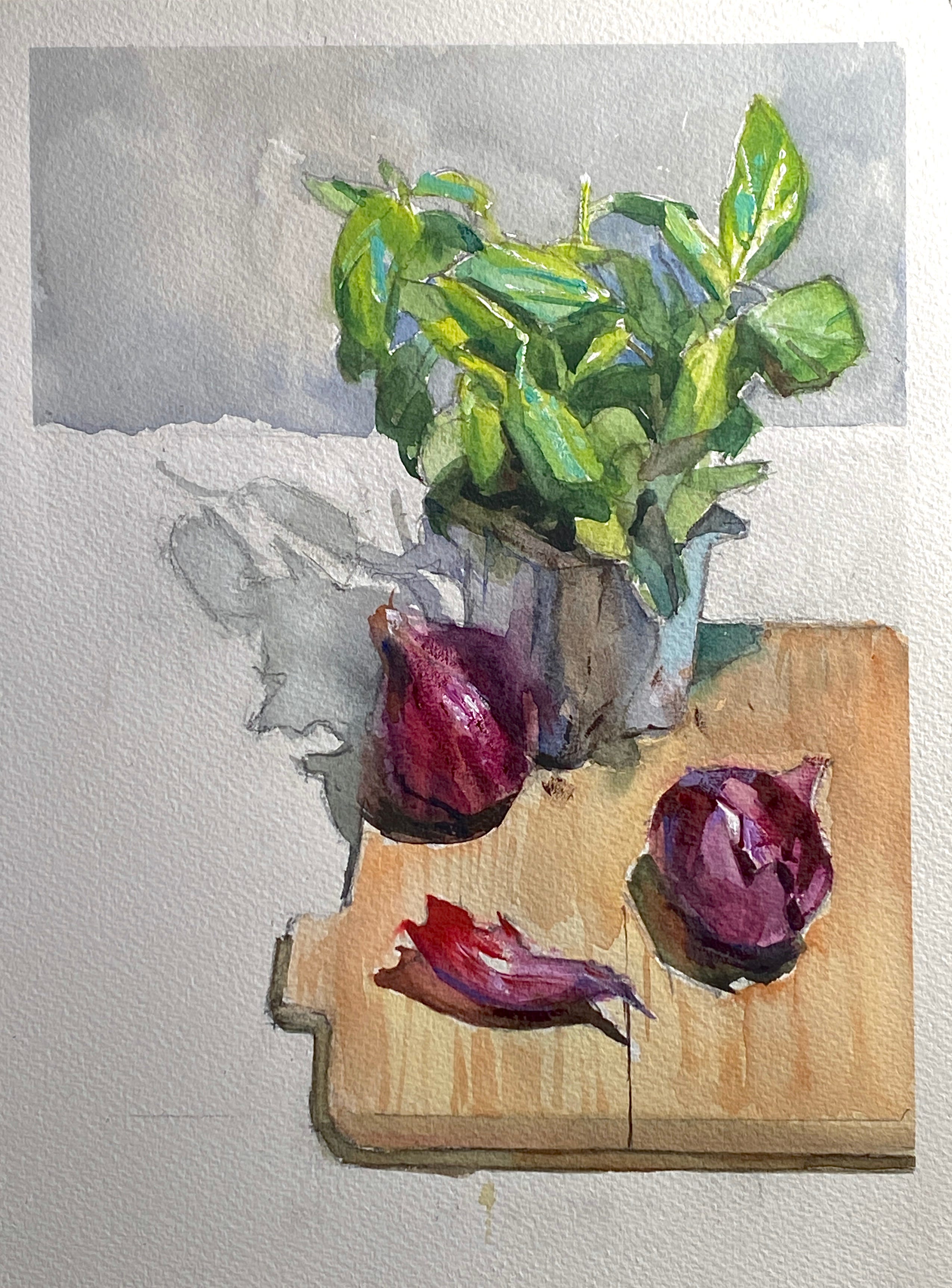
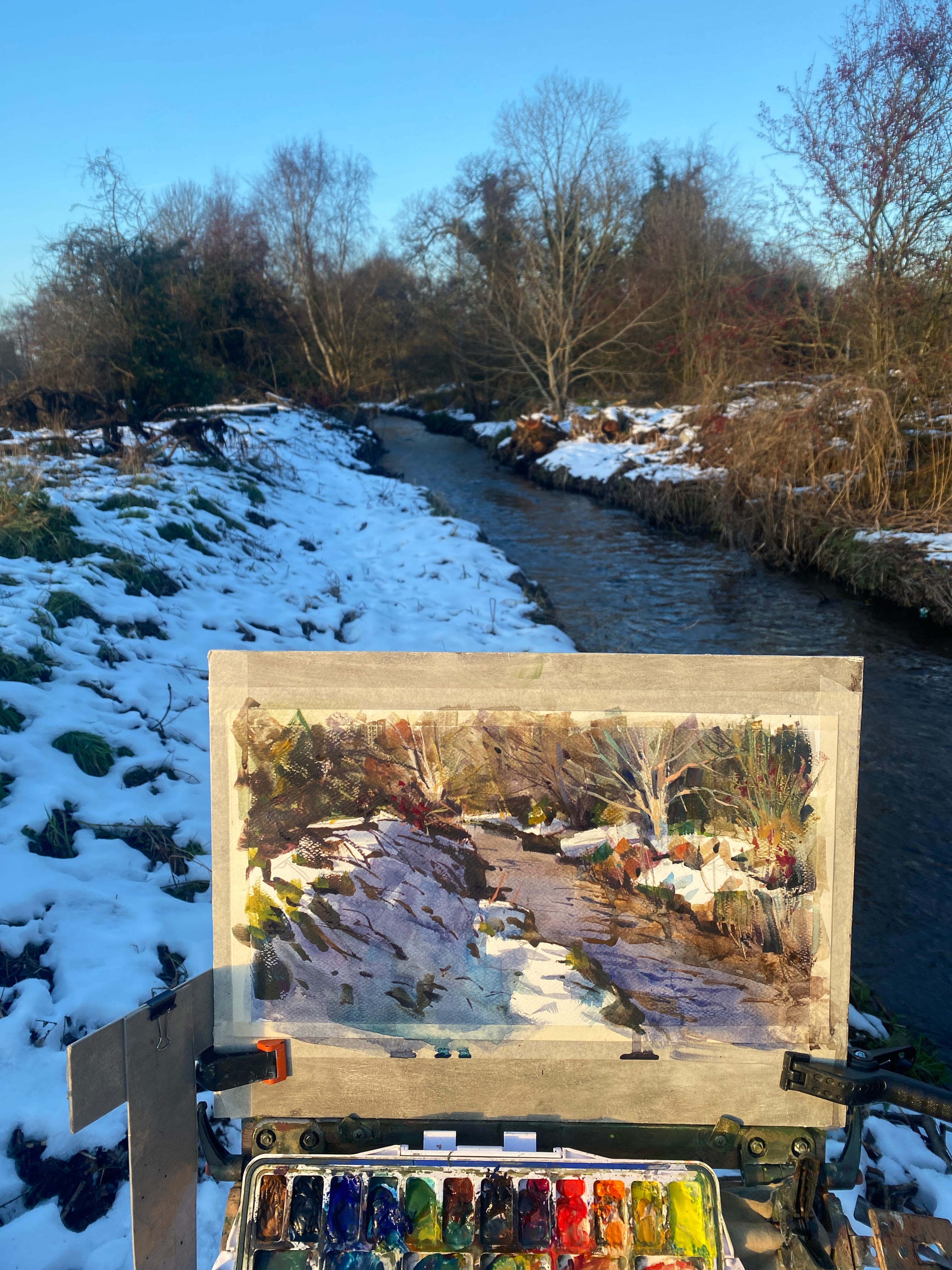
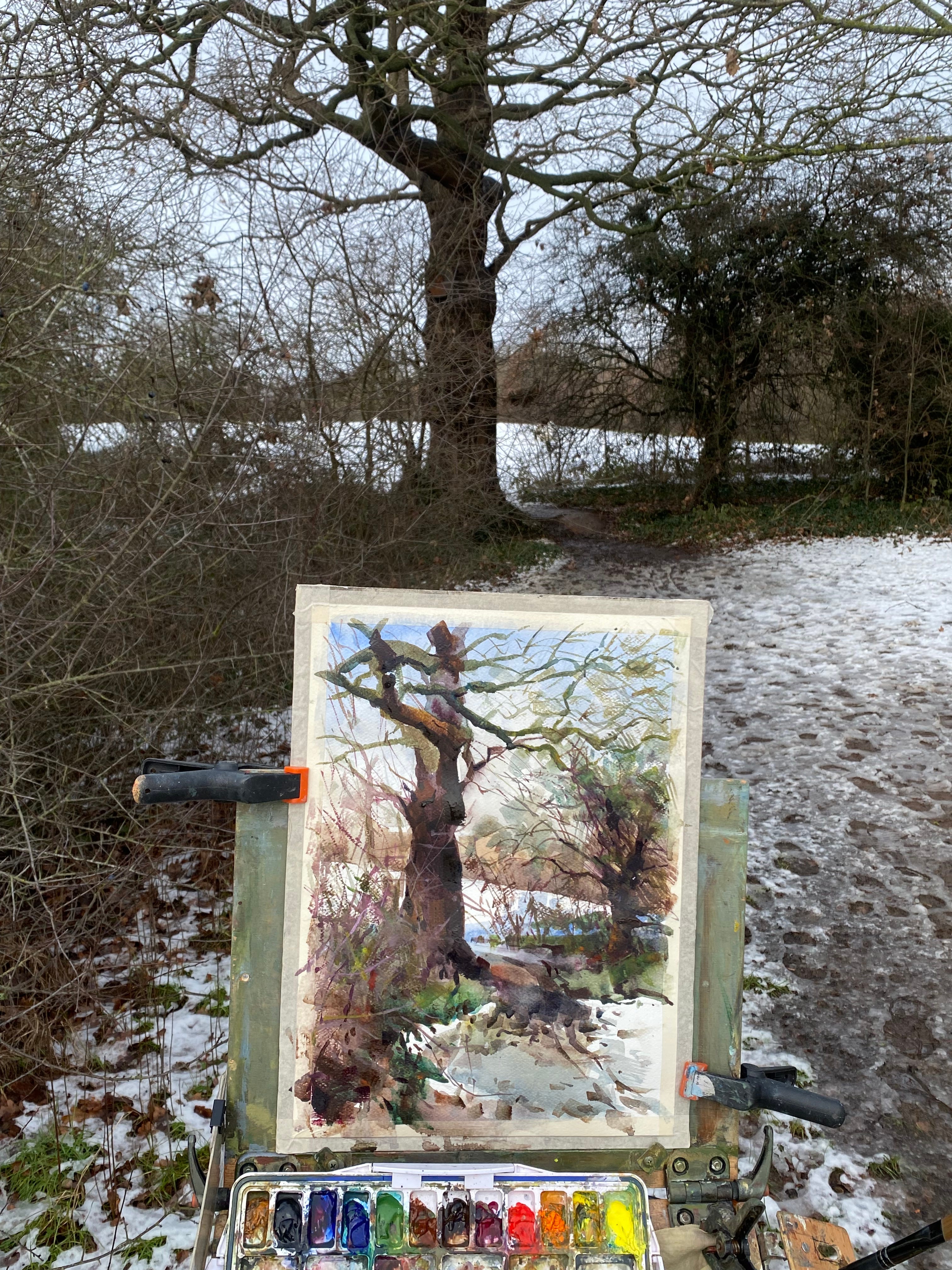
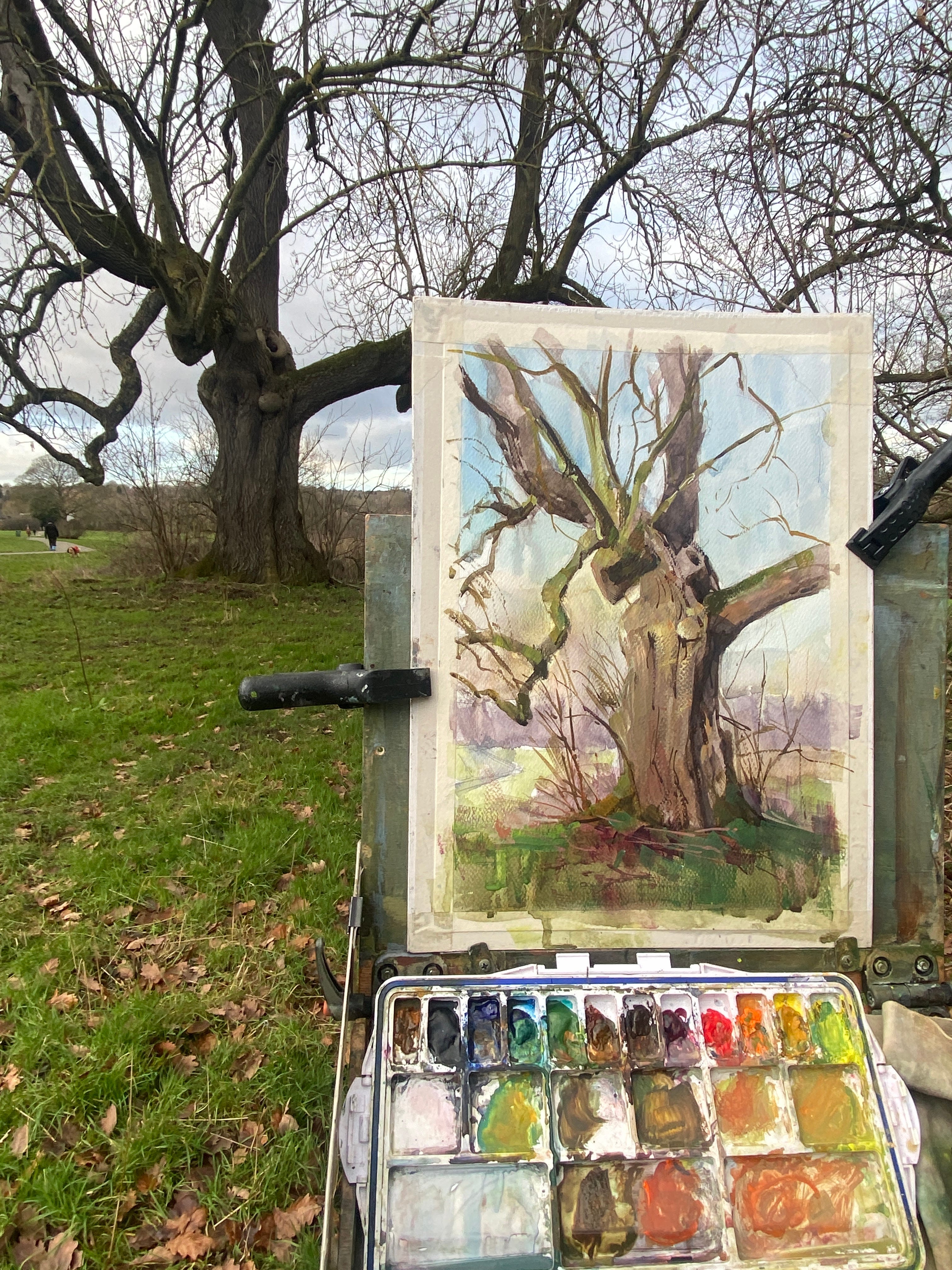
This month I’ve also been working in watercolour—both alone and in combination with gouache—while taking part in the Strada Challenge (daily paintings from life throughout January). This has been a genuine struggle at times, and occasionally a frustrating one, as I’m still a relative beginner with the medium. There’s something bracing about being a beginner again, along with the familiar end-of-session question: where, precisely, did it all go wrong?
I’ve been watching demonstrations by painters such as Joseph Zbukvic and Chung Wei Chien, trying to glean practical ways of embracing the strengths of these mediums rather than fighting them. Both seem very much on my wavelength in their appreciation of the tension between abstraction and representation. Watercolour, in particular, has a will of its own. Try to dominate it, and it will punish you—usually with a muddy mess.
You can see my progress so far on Instagram, if you’re inclined towards such things. I’ll be offering all the paintings from the Strada Challenge to subscribers via a blind auction in February, with prices starting at $50 per work.
Below are a few of the paintings completed so far.
By the way, I often get asked where recordings of previous classes can be found. If you’re a subscriber, they’re all available at the link below which will take you to my Substack page.
The next live class will be on Saturday 7th February, starting at 4pm UK time.
The link is at the very end of this email for paying subscribers.
I hope you find the recording interesting and look forward to seeing you in a future class!
Happy painting,
Alex


